
How to Select Mining Lubricants for Heavy Equipment in Nigeria
Select mining lubricants by equipment specification, component, operating temperature, load, contamination risk and service interval. This decision guide helps Nigerian maintenance teams choose oils and grease for excavators, loaders, haulage equipment, crushers, drills and fixed plant.

Mining lubricant decision tree
| Question | If yes | Next evidence |
|---|---|---|
| Is the OEM lubricant specification available? | Start with the stated viscosity and performance category | Confirm climate range, component and approved alternatives |
| Does the component face high dust or water ingress? | Strengthen contamination controls and check fluid or grease resistance | Inspect seals, breathers, filtration and storage |
| Is operating temperature outside the normal range? | Investigate the cause and assess viscosity at operating temperature | Use oil analysis, temperature data and OEM limits |
| Are shock load and slow speed dominant? | Assess base oil viscosity and load carrying properties | Confirm grease consistency, application and compatibility |
| Is an extended drain interval proposed? | Use condition monitoring before extending | Trend viscosity, contamination, oxidation and wear indicators |
Step 1, identify the exact component
Do not select a product for the machine name alone. One excavator may require engine oil, hydraulic oil, swing drive oil, final drive oil, coolant and several greases. Each compartment has a different function and specification. Record the make, model, serial range, component, fill volume and manual reference.
Step 2, confirm viscosity and performance specification
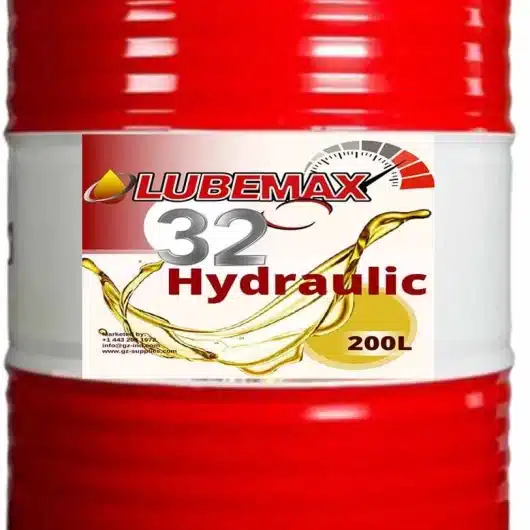
Viscosity determines the oil film at start up and operating temperature. Too low can reduce film strength. Too high can increase drag, slow circulation and create poor cold start behaviour. Match the required SAE or ISO viscosity grade and the stated performance category. For gear systems, determine whether the equipment needs an automotive gear oil, industrial gear oil, transmission fluid or another specialised fluid.
Step 3, assess Nigerian operating conditions
Dust and fine particles
Review air filtration, breathers, seals, transfer cleanliness and oil analysis. Dust control often produces more value than changing brand.
Rain and wash water
Check storage, water ingress and grease washout. Use covered stores, closed containers and suitable water resistant grease where required.
Heat and severe duty
Collect actual sump, hydraulic and bearing temperatures. Investigate cooling, load and contamination before changing viscosity.
Step 4, select grease by more than colour
Grease colour does not define suitability. Compare the thickener, NLGI grade, base oil viscosity, temperature range, water resistance, load carrying performance, pumpability and compatibility. Centralised systems may need different pumpability from manual greasing. Pins and bushes may need a different product from high speed electric motor bearings.
Step 5, control compatibility during changeover
- Confirm oil and grease compatibility before mixing products.
- Drain, clean or purge according to the component and supplier guidance.
- Label every dispensing container and application tool.
- Record the change date, product, quantity and equipment hours.
- Inspect filters and sample the oil after a controlled change.
Step 6, set the interval from evidence
Start with the OEM service interval. Adjust only when operating data supports it. Oil analysis, filter inspection, temperature, contamination, top up volume, component condition and maintenance history can help determine whether the interval remains suitable. Extending an interval without condition monitoring transfers risk to the equipment.

Mining lubricant selection checklist
| Evidence | Record | Why it matters |
|---|---|---|
| Equipment and component | Make, model, serial range and compartment | Prevents one product being applied to the wrong system |
| OEM requirement | Viscosity, performance class and approvals | Defines the technical baseline |
| Operating condition | Temperature, load, dust, water and duty cycle | Tests whether the baseline is adequate |
| Current lubricant | Product, hours, consumption and issues | Supports compatibility and changeover planning |
| Maintenance control | Storage, filtration, sampling and greasing method | Protects the selected product in service |
| Supply requirement | Pack size, monthly consumption and site | Supports stock planning and quotation |
Common mistakes to avoid
- Choosing by brand name without checking specification.
- Using one grease because it is available, not because it fits every point.
- Mixing grease without checking thickener compatibility.
- Transferring clean oil through dirty funnels or open buckets.
- Adding a thicker oil to solve overheating without diagnosing the cause.
- Changing several variables at once and losing the ability to identify the result.
What information should be on a mine lubricant register?
Include asset, component, lubricant, specification, fill volume, point quantity, method, interval, storage code and sampling requirement.
Can oil analysis select a lubricant by itself?
No. It helps monitor condition and contamination. Selection still requires the equipment specification, operating condition and product data.
Request help selecting mining lubricants
Send the equipment list, manual specifications, current products, operating condition and delivery site. Epoxy Oilserv can review the requirement and prepare a supply quotation.
For commercial supply, visit Mining Lubricants Supplier in Nigeria. For a component matrix, read Lubricants and Grease for Nigerian Mining Companies.