How Long Does Epoxy Floor Paint Last
Quick answer
A properly specified and installed epoxy floor can provide roughly 5 to 15 years of useful service in many residential, commercial and light-industrial settings. Heavy forklift traffic, chemicals, moisture, poor concrete preparation or direct sunlight can shorten that period, while good preparation, the correct system and planned recoating can extend it.
“How long does epoxy floor paint last?” sounds simple, but the answer depends on what has actually been installed. A thin paint-grade coating in a lightly used room is not the same as a professionally prepared, multi-layer industrial epoxy flooring system in a warehouse, workshop, food-processing area or production plant.
In Nigeria, service life is also affected by concrete moisture, rising damp, dust, high temperatures, ultraviolet exposure at open entrances, coastal humidity, cleaning practices and the weight and movement of equipment. This guide explains realistic lifespan ranges, the warning signs of failure and the maintenance decisions that protect your investment.
Typical epoxy floor lifespan by use
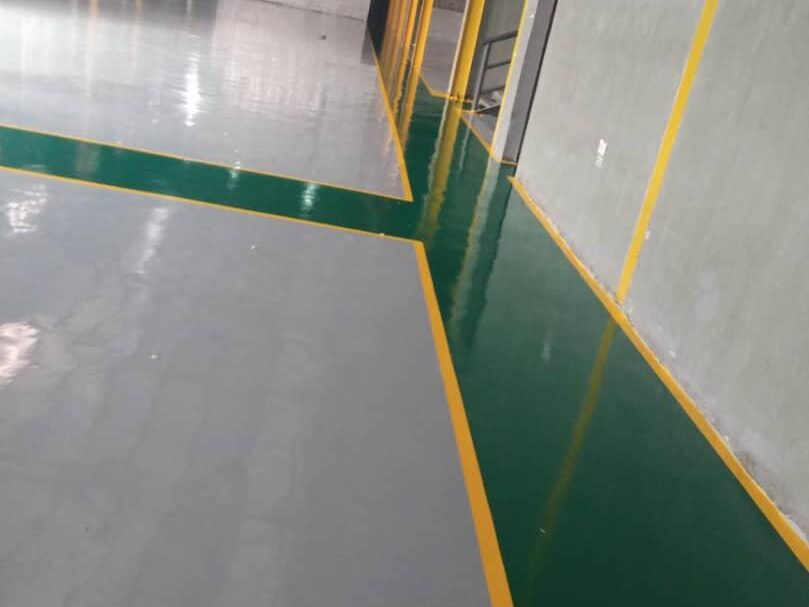
The following ranges are planning estimates, not guarantees. A site inspection, moisture testing, expected load, chemical exposure and the proposed system build-up are needed before a reliable project-specific expectation can be given.
| Setting or system | Typical useful service range | Main life-limiting factors |
|---|---|---|
| Light residential or low-traffic interior | 7–15 years | Cleaning methods, sunlight, impact damage and moisture below the slab |
| Office, showroom or moderate commercial use | 5–10 years | Foot traffic, grit, furniture movement and inadequate topcoat protection |
| Warehouse or light industrial floor | 5–10 years | Carts, pallet movement, tyre marking, oil and localised impact |
| Heavy industrial or regular forklift traffic | 3–7 years before major renewal may be needed | Wheel loads, turning points, dropped tools, chemicals and insufficient system thickness |
| Garage or workshop | 4–10 years | Hot tyres, oil, solvents, welding activity, abrasion and weak concrete |
| Exterior or strong UV exposure | 2–5 years without a suitable UV-stable finish | Chalking, colour change, heat cycling and water exposure |
| Thin paint-grade epoxy coating | 2–5 years | Low film thickness, limited surface preparation and repeated abrasion |
Epoxy floor paint versus an epoxy flooring system
“Epoxy floor paint” is commonly used as a general term, but buyers should distinguish between a thin coating and a resinous flooring system. A coating may be one or two layers applied mainly for colour, cleanability and light protection. A flooring system can include primer, body coat, aggregate, mortar or self-levelling layers and a protective topcoat. The thicker and better-matched system normally tolerates more wear, provided the concrete beneath it is sound.
Epoxy is formed when resin and hardener react. Existing product references for resins and hardeners are retained here. For commercial supply and application options, see Epoxy Oilserv’s epoxy paints and floor coatings page or the epoxy resins and hardeners page.
The seven factors that decide how long an epoxy floor lasts
1. Concrete condition and strength
Epoxy cannot permanently correct a weak, friable or moving concrete base. If the substrate breaks, cracks or releases dust, the coating can detach with it. Cracks and joints should be assessed before installation rather than hidden under resin.
2. Moisture in or below the slab
Moisture vapour is a major cause of blistering and loss of adhesion. New concrete needs adequate curing time, and existing floors should be tested rather than judged only by appearance. Ground-bearing slabs without an effective damp-proof membrane may require a moisture-tolerant primer or a different solution.
3. Surface preparation
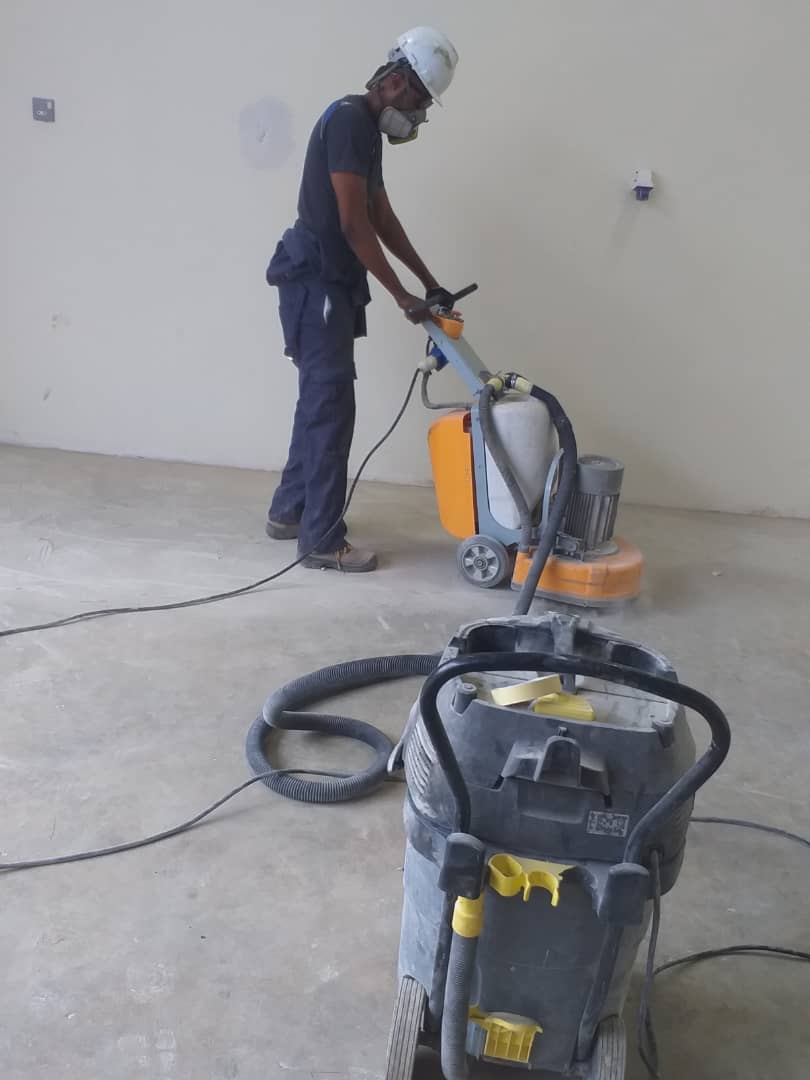
Preparation is usually more important than the final colour. Oil, laitance, curing compounds, weak paint and dust must be removed. Mechanical grinding or shot blasting creates a clean, sound profile that allows the primer to bond. A retained external explanation of a proper surface preparation process provides additional technical context.
4. System thickness and specification
A thin roller coat should not be expected to perform like a high-build or mortar system under forklifts and dropped loads. The specification should match the area’s actual duty: pedestrians, trolleys, vehicles, thermal change, washdown, chemicals, food hygiene or electrostatic-control requirements.
5. Traffic, impact and abrasion
Wear concentrates at doorways, loading points, ramps, production lines and forklift turning circles. Hard wheels and embedded grit can abrade a surface faster than ordinary foot traffic. These zones may need extra build thickness, aggregate reinforcement or a tougher topcoat.
6. Chemicals and cleaning regime
Repeated exposure to acids, alkalis, fuels, solvents, oils or hot cleaning water can stain, soften or attack an unsuitable resin. The contractor should review the chemical, concentration, temperature, contact time and cleaning method before recommending a system. “Chemical resistant” does not mean resistant to every chemical under every condition.
7. UV exposure and temperature
Standard epoxy may chalk or change colour in direct sunlight. Areas near open loading bays, external walkways and sunlit entrances may need a UV-stable polyurethane or polyaspartic finish. The original article’s reference to a urethane topcoat is retained for readers comparing finish types.
How to make an epoxy floor last longer
- Specify from operating conditions. Record traffic, wheel type, cleaning chemicals, temperature, wet areas and expected impacts before choosing a coating.
- Test the concrete. Check moisture, surface strength, cracks, contamination and previous coatings.
- Prepare mechanically. Grinding or shot blasting is generally more dependable than relying on washing alone.
- Use the correct primer and thickness. A low-cost thin coat can become expensive if it fails during operations.
- Protect vulnerable areas. Use mats where grit enters, avoid dragging metal and add protection beneath concentrated loads where appropriate.
- Clean with compatible products. Remove abrasive dirt regularly and avoid harsh pads or unapproved chemicals.
- Repair early. Address chips, local delamination and open joints before water and traffic enlarge the damage.
- Recoat before the body layer is exposed. A planned topcoat renewal is usually easier and less disruptive than rebuilding a failed system.
Practical maintenance and inspection plan
| Frequency | Action | What to look for |
|---|---|---|
| Daily or after operations | Remove sand, metal fragments, chemical spills and standing water | Abrasive debris, staining and slippery residues |
| Weekly | Clean with a compatible neutral or approved cleaner | Dull zones, tyre marks and recurring contamination |
| Monthly | Inspect doors, drains, joints, ramps and equipment routes | Chips, cracks, edge lifting and worn turning points |
| Quarterly | Review high-load and chemical-exposure zones | Loss of texture, surface softening, blistering or discolouration |
| Annually | Arrange a documented condition review for critical floors | Areas needing local repair, retexturing or topcoat renewal |
Warning signs that an epoxy floor needs attention
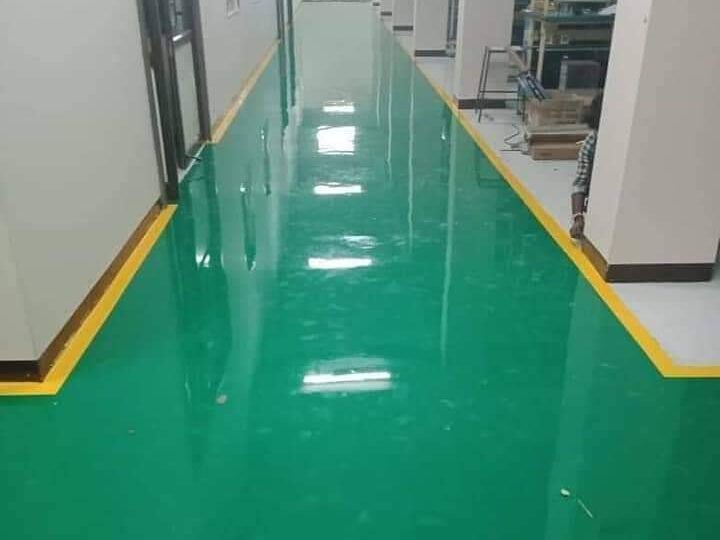
- Blisters or bubbles, which may indicate moisture or trapped contamination
- Peeling or edge lifting, often linked to preparation, moisture or movement
- Deep scratches or exposed aggregate in traffic lanes
- Cracks that continue through the coating
- Softening, staining or loss of gloss after chemical exposure
- Loss of slip resistance in wet or oily areas
- Chalking or colour change in sun-exposed locations
Localised wear does not always mean the whole floor must be removed. Early inspection can determine whether cleaning, spot repair, sanding and recoating, joint repair or full replacement is appropriate. You can also review examples through the Epoxy Oilserv Projects page.
Choosing the right epoxy floor for the application
Self-levelling epoxy can create a smooth, cleanable finish for suitable commercial and industrial spaces. Mortar systems are considered for heavier impact or repairs. Quartz-filled or broadcast systems can add texture and slip resistance. Anti-static systems are used only where a properly designed electrostatic-control floor is required. Decorative flake systems can improve appearance while adding texture. The final choice must follow the substrate and operational risk, not appearance alone.
Related resources retained from the original article include epoxy flooring for sports courts, an external epoxy resin overview, a 3D epoxy floor-system reference, the earlier epoxy floor training link, the original epoxy flooring services link and the Epoxy Oilserv press-release archive. These links have not been removed.
Frequently asked questions
Can an epoxy floor last 20 years?
It can in a favourable indoor environment with sound concrete, professional preparation, a suitable system, controlled traffic and planned maintenance. Twenty years should not be used as a universal promise, especially for heavy industrial or exterior service.
How often should epoxy flooring be recoated?
There is no fixed interval. Inspect the actual wear. A commercial or industrial floor may need a new topcoat after several years, while a lightly used interior can remain serviceable much longer. Recoat before wear reaches the body layer or concrete.
Why does epoxy flooring peel?
Common causes include moisture vapour, oil or dust contamination, insufficient mechanical preparation, weak concrete, incorrect mixing, application outside the product’s conditions or movement at cracks and joints.
Does sunlight damage epoxy flooring?
Direct UV exposure can cause standard epoxy to chalk or change colour. A suitable UV-stable topcoat or alternative finish should be considered for sun-exposed areas.
Can an old epoxy floor be renewed without removing everything?
Often, yes. If the existing system remains well bonded, it may be cleaned, mechanically abraded, repaired and recoated. Widespread delamination, moisture problems or weak concrete may require more extensive removal and correction.
Need a realistic service-life recommendation?
Epoxy Oilserv Nigeria Limited can review the substrate, traffic, chemical exposure, cleaning method and project location before recommending a system. Send the floor area, photographs, intended use, present condition and delivery or installation location. Existing contact routes are preserved through the professional epoxy installer contact page and Contact us.
Conclusion: A well-designed epoxy floor is not judged only by how many years it remains visible. It should continue to bond, protect the concrete, resist expected traffic and chemicals, remain cleanable and support safe operations. The most dependable way to extend its life is to specify the right system, prepare the substrate properly and intervene before small wear becomes widespread failure. The original flooring company and Epoxy Oilserv Nigeria homepage links have been retained.