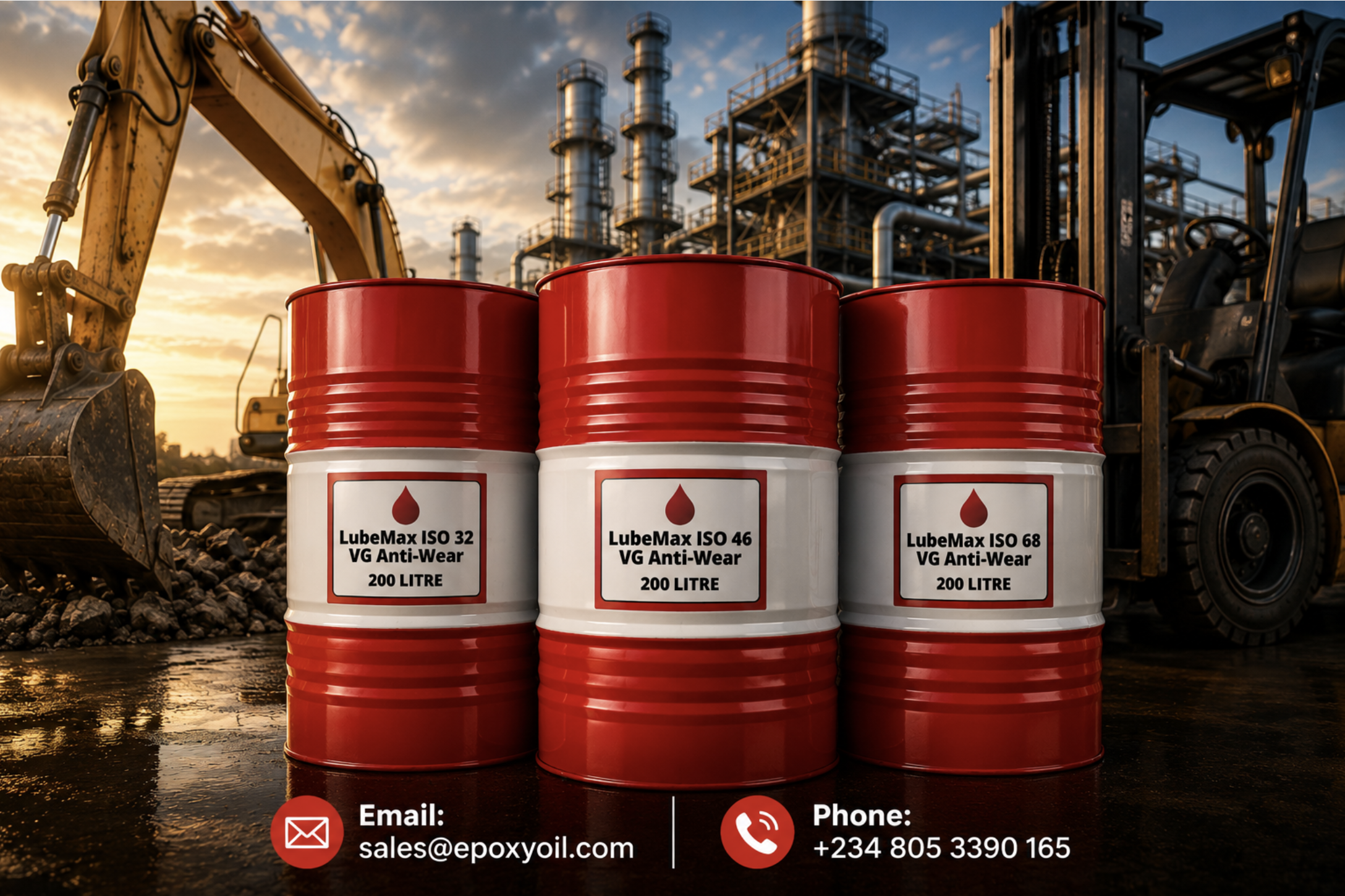
Hydraulic Oil ISO 32 vs ISO 46 vs ISO 68 is one of the most common comparisons made by maintenance engineers, procurement managers, mechanics, and equipment owners when selecting hydraulic fluid. Choosing the correct hydraulic oil viscosity is essential for maximizing equipment performance, reducing wear, preventing overheating, and extending the service life of hydraulic systems. In this guide, we’ll compare ISO VG 32, ISO VG 46, and ISO VG 68, explain their differences, applications, and help you choose the right hydraulic oil for your equipment.
One of the most common questions maintenance engineers, procurement managers, mechanics, and equipment owners ask is:
Should I use ISO 32, ISO 46 or ISO 68 hydraulic oil?
Although these three hydraulic oils look similar, they perform differently under varying operating temperatures, equipment loads, and working environments. Choosing the wrong viscosity can result in sluggish system response, reduced pump efficiency, increased wear, overheating, higher fuel consumption, and premature equipment failure.
In this guide, we explain the differences between Hydraulic Oil ISO VG 32, ISO VG 46, and ISO VG 68, their applications, technical properties, advantages, and how to select the right hydraulic oil for your equipment and operating conditions in Nigeria.
What is Hydraulic Oil?
Hydraulic oil is a specially formulated fluid used to transmit power within hydraulic systems. Beyond power transmission, it performs several critical functions:
- Lubricates pumps, valves, cylinders, and hydraulic motors
- Transfers hydraulic power efficiently
- Reduces friction and wear
- Dissipates heat
- Protects components against corrosion
- Carries contaminants to filters
- Maintains system sealing
Without the correct hydraulic oil, even the most advanced hydraulic equipment will experience reduced efficiency and shortened service life.
What Does ISO VG Mean?
ISO VG stands for International Organization for Standardization Viscosity Grade.
The ISO VG classification indicates a hydraulic oil’s viscosity at 40°C.
Examples include:
| ISO Grade | Viscosity @40°C |
| ISO VG 32 | 32 cSt |
| ISO VG 46 | 46 cSt |
| ISO VG 68 | 68 cSt |
Simply put:
- Lower ISO numbers indicate thinner oils.
- Higher ISO numbers indicate thicker oils.
The right viscosity depends on:
- Ambient temperature
- Operating temperature
- Pump design
- Machine age
- System pressure
- Manufacturer recommendations
Understanding HV Hydraulic Oil
All three LubeMax products are classified as HV (High Viscosity Index) hydraulic oils. This means they are formulated to maintain stable viscosity across a wide temperature range while providing strong anti-wear protection for hydraulic systems operating under demanding conditions.
Compared with conventional hydraulic oils, HV fluids generally provide:
- Better cold-start performance
- Improved viscosity stability
- Enhanced wear protection
- Longer oil life
- Reliable performance in changing climates
ISO 32 vs ISO 46 vs ISO 68 – Technical Comparison
| Property | ISO 32 | ISO 46 | ISO 68 |
| ISO Viscosity Grade | 32 | 46 | 68 |
| Fluid Type | HV | HV | HV |
| Kinematic Viscosity @40°C | 32 cSt | 46 cSt | 68 cSt |
| Kinematic Viscosity @100°C | 6.1 cSt | 7.9 cSt | 10.5 cSt |
| Viscosity Index | 143 | 143 | 142 |
| Density @15°C | 872 kg/m³ | 872 kg/m³ | 877 kg/m³ |
| Flash Point | 210°C | 225°C | 225°C |
| Pour Point | -39°C | -36°C | -36°C |
| Dielectric Strength | >30 kV | >30 kV | >30 kV |
Technical values taken from the LubeMax product datasheets.
Hydraulic Oil ISO VG 32
ISO VG 32 is the lightest viscosity among the three grades. It flows more easily at lower temperatures, making it suitable for precision hydraulic systems and equipment that requires quick hydraulic response.
Best Applications
- CNC machines
- Precision manufacturing equipment
- Indoor hydraulic systems
- Plastic moulding equipment
- Hydraulic test benches
- Warehouse equipment
- Light-duty hydraulic systems
Advantages
- Excellent cold-start performance
- Fast hydraulic response
- Reduced internal resistance
- Improved energy efficiency
- Better performance in cooler environments
Hydraulic Oil ISO VG 46
ISO VG 46 is the most commonly used hydraulic oil in industrial and construction applications. It offers an excellent balance between flow characteristics and load-carrying capability.
Best Applications
- Excavators
- Backhoe loaders
- Forklifts
- Mobile cranes
- Agricultural machinery
- Hydraulic presses
- Industrial production equipment
- Manufacturing plants
Advantages
- Suitable for most Nigerian operating conditions
- Excellent wear protection
- High thermal stability
- Good oxidation resistance
- Reliable performance throughout the year
Hydraulic Oil ISO VG 68
ISO VG 68 is the thickest of the three oils. It is designed for heavily loaded hydraulic systems operating under higher temperatures or severe-duty conditions.
Best Applications
- Steel mills
- Mining equipment
- Marine hydraulic systems
- Heavy-duty presses
- Large industrial machinery
- High-load hydraulic power units
- Equipment operating continuously in hot environments
Advantages
- Strong oil film strength
- Excellent load-carrying capacity
- Better protection for worn hydraulic systems
- Enhanced performance under heavy-duty operation
Which Hydraulic Oil Should You Choose?
| Equipment | Recommended Grade |
| CNC Machine | ISO VG 32 |
| Injection Moulding Machine | ISO VG 32 |
| Forklift | ISO VG 46 |
| Excavator | ISO VG 46 |
| Backhoe Loader | ISO VG 46 |
| Mobile Crane | ISO VG 46 |
| Agricultural Tractor | ISO VG 46 |
| Hydraulic Press | ISO VG 68 |
| Steel Plant Equipment | ISO VG 68 |
| Marine Hydraulic Systems | ISO VG 68 |
Which Hydraulic Oil is Best for Nigeria?
Nigeria’s high ambient temperatures mean ISO VG 46 is the preferred choice for many mobile and industrial hydraulic systems because it balances flow characteristics with protection.
ISO VG 32 is typically chosen for equipment requiring faster hydraulic response or operating in controlled indoor environments.
ISO VG 68 is better suited to heavy-duty machinery, older hydraulic systems with greater internal clearances, or equipment exposed to sustained high operating temperatures.
Always follow your equipment manufacturer’s viscosity recommendation before changing grades.
Why Choose LubeMax Hydraulic Oil?
According to the product datasheets, LubeMax HV hydraulic oils are formulated to provide:
- Excellent viscosity control across a wide temperature range
- Long service life through resistance to thermal and chemical degradation
- Zinc-based anti-wear protection
- Reduced sludge formation
- Good moisture stability
- Corrosion and rust protection
- Excellent filterability
- Effective water separation
- Anti-foam performance
- Proven protection for piston and vane pumps operating under severe-duty conditions.
Can You Mix ISO 32, ISO 46, and ISO 68?
While mineral oil-based hydraulic fluids are generally compatible with each other, mixing different viscosity grades can alter the final viscosity and affect hydraulic system performance. The LubeMax datasheets also note that these fluids are compatible with most mineral oil-based hydraulic fluids but should not be mixed with environmentally acceptable or fire-resistant hydraulic fluids.
If a viscosity change is required:
- Drain the old oil.
- Replace the hydraulic filter.
- Flush the system if necessary.
- Refill with the correct grade recommended by the equipment manufacturer.
Common Mistakes When Choosing Hydraulic Oil
Avoid these common errors:
- Selecting the thickest oil assuming it offers the best protection.
- Ignoring the equipment manufacturer’s viscosity recommendation.
- Mixing different hydraulic fluid types without confirming compatibility.
- Failing to replace contaminated hydraulic oil on schedule.
- Using engine oil instead of dedicated hydraulic oil.
Frequently Asked Questions
Is ISO 46 thicker than ISO 32?
Yes. ISO VG 46 has a higher viscosity and forms a thicker lubricating film than ISO VG 32.
Is ISO 68 better than ISO 46?
Not necessarily. ISO VG 68 is designed for heavier loads and higher operating temperatures, while ISO VG 46 is the preferred choice for many general industrial hydraulic systems.
Which hydraulic oil is best for excavators?
Many excavators operate effectively with ISO VG 46, but always follow the OEM specification.
Can I use ISO 68 instead of ISO 46?
Only if the equipment manufacturer approves it. Using a thicker oil than recommended may reduce efficiency and affect system response.
Which hydraulic oil is most commonly used in Nigeria?
ISO VG 46 is widely used across construction, manufacturing, logistics, agriculture, and industrial maintenance because it performs well in typical Nigerian operating conditions.
Conclusion
Choosing between ISO VG 32, ISO VG 46, and ISO VG 68 isn’t about selecting the highest number—it’s about selecting the viscosity that matches your equipment, operating temperature, and application.
- Choose ISO VG 32 for precision systems and faster hydraulic response.
- Choose ISO VG 46 for most industrial, construction, and mobile hydraulic equipment.
- Choose ISO VG 68 for heavy-duty systems operating under high loads or elevated temperatures.
LubeMax HV Anti-Wear Hydraulic Oils are engineered to deliver stable viscosity, outstanding anti-wear protection, oxidation resistance, moisture stability, and long equipment life, making them a dependable choice for demanding hydraulic applications.
Contact Epoxy Oilserv Nigeria Limited
Need help selecting the right hydraulic oil for your equipment?
Our technical team can recommend the most suitable LubeMax hydraulic oil based on your machinery, operating environment, and maintenance requirements. Contact Epoxy Oilserv Nigeria Limited for expert advice, product availability, and competitive pricing.